Reynolds Field Station Booth at Geological Society of America Connects 2026 Conference October 11-14, 2026 Denver, CO
RFS is pleased to announce the Reynolds Field Station booth at Geological…
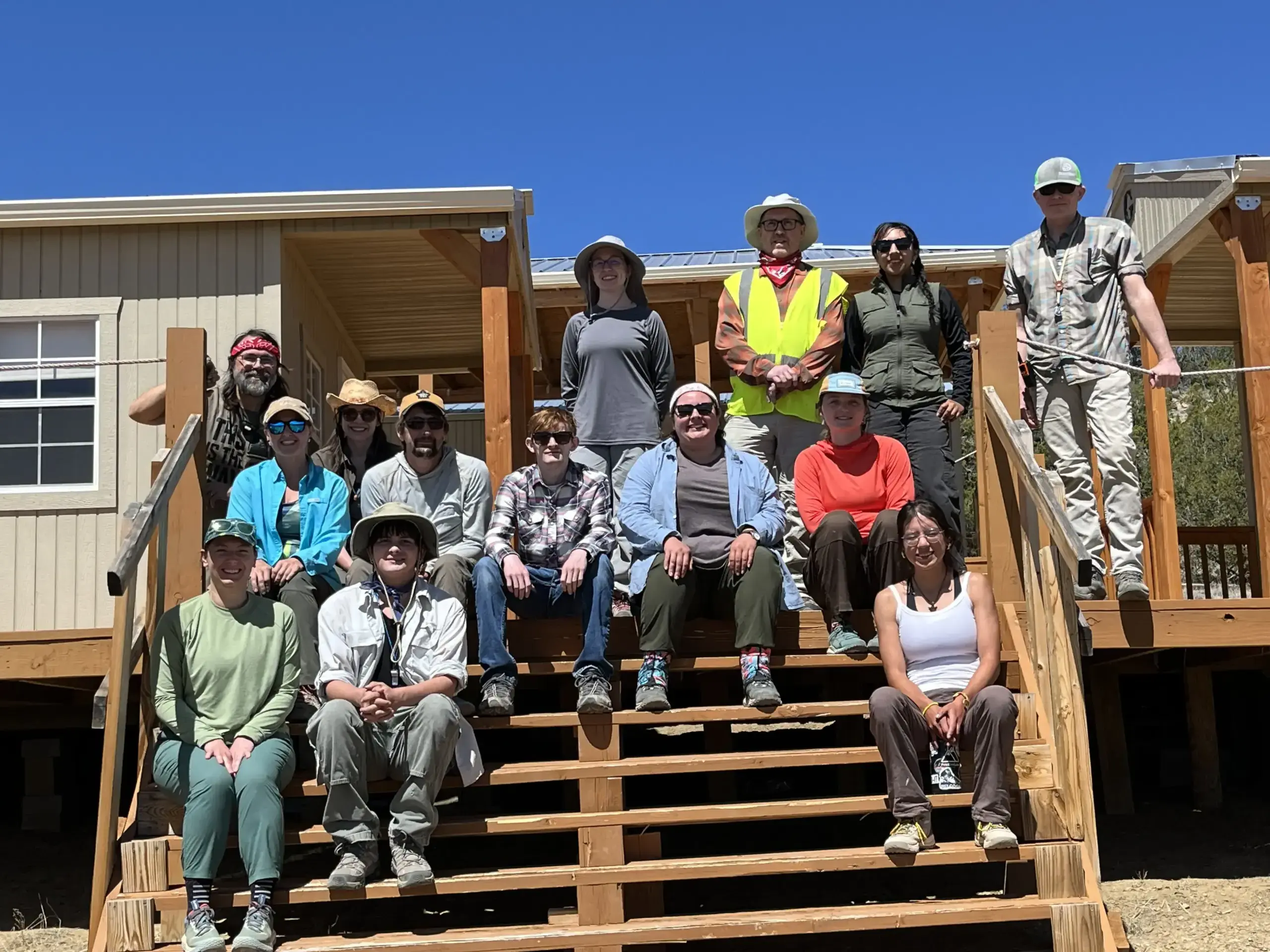
A dynamic multi-disciplinary group of researchers, professors and students from the Perot Museum of Nature & Science in Dallas, New Mexico State University, and Hanover College, Indiana joined forces at RFS for the Spring 2026 field season from May 26 to June 5, 2026. They exceeded expectations in accomplishing successful joint and individual field research goals.
The 2026 Field Science Army
The team from the Perot Museum (PMNS) included:
The team from New Mexico State University (NMSU) Department of Geological Sciences included:
Dr. Rachel Laker, Assistant Professor from Hanover College, Indiana joined both as a stratigraphic expert and to pursue her research into exposure duration and bone preservation in both modern and fossil bones.
The following accounts of the field season make direct use of descriptions written by Dori Contreras of PMNS and by the faculty of NMSU (Andrew Flynn, Brian Hampton, and Jennifer Thines). Please refer to our Glossary of Terms in the Education & Outreach page of this website if you are unfamiliar with or wish to learn more about some of the technical terms used in this article.
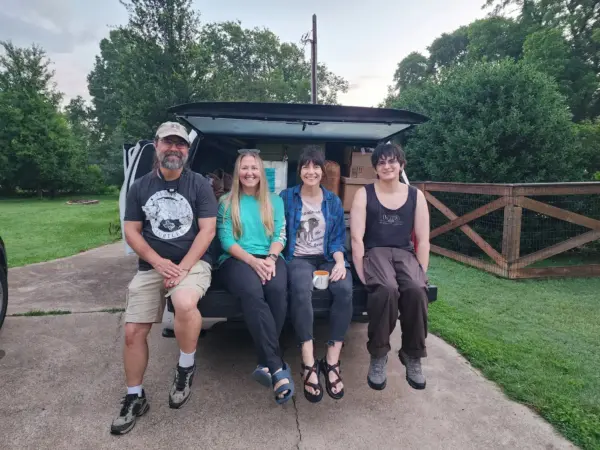 All packed up in Dallas and ready to go.
…What they really look like in the field:
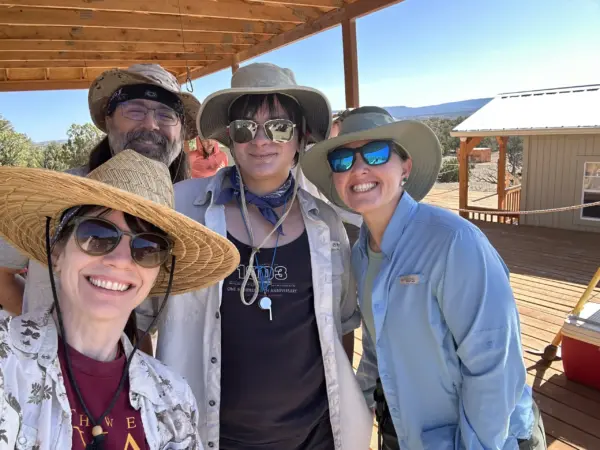
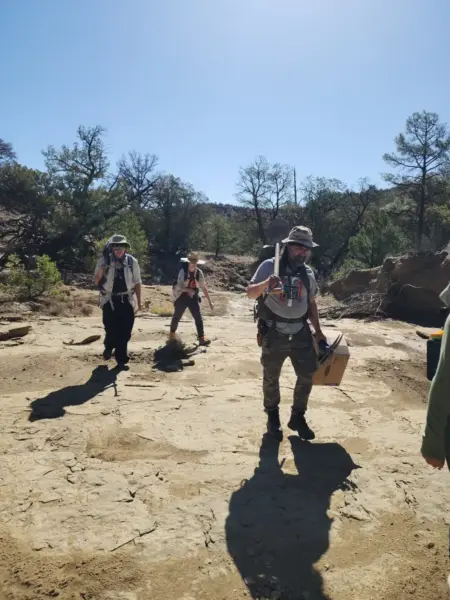
The view from PMNS’s camp site and the RFS guest trailer is pretty spectacular!
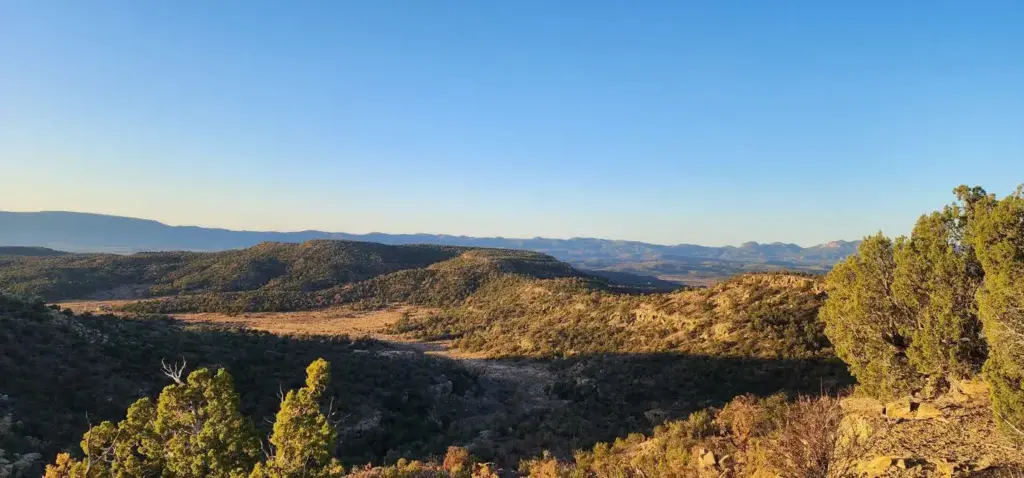
This trip was PMNS’s fourth expedition to the Reynold’s Field Station in New Mexico, in their ongoing work to discover and study the flora and fauna of the Upper Cretaceous Crevasse Canyon Formation at RFS. Past trips laid a solid, although exploratory, foundation documenting the presence of promising plant fossil sites as well as the occurrence of fossil bones. This expedition was intended to significantly bolster sampling of plant fossils from different deposits, prospect for additional fossil sites, and to work with colleagues from New Mexico State University to better flesh out the fine-scale stratigraphic context for the area. PMNS’s ultimate goal is to reconstruct the ecosystem and environment from this poorly understood interval of the Cretaceous.
The first several days were dedicated to PMNS-NMSU joint primary missions: recovering fossils found last year, and prospecting and collecting plant fossils in the vicinity; developing a stratigraphic column for the area, while collecting samples for analyzing paleosols (fossil soils), magnetostratigraphy, and palynology (fossil pollen). The goal is a fine scale stratigraphic column, the beginning of a larger compilation, that will be the framework in which we can plug all other data to better understand the ancient environment and its place in time. Fossil soils tell us about the ground water conditions and seasonality of the landscape, among other things. Fossil pollen samples show what plants lived the broader area and are also used for biostratigraphy, a method of determining the age of the rocks by what specific key fossils are found in them. Integrating NMSU’s magnetostratigraphy provides another measure of the age of the sedimentary rocks, based on the magnetic signature of the rocks indicating whether they were deposited during a time of “normal” or “reversed” magnetic polarity of the Earth. The combined team was successful on all fronts. The NMSU team were able to generate a relatively complete measured geological section encompassing most of the first collection area that will provide a great high-resolution baseline for the area – more detail about NMSU’s magnetostratigraphy and paleosol efforts are detailed after PMNS’s results further below. Samples that were collected from the trenches by both teams will provide coordinated sets of data on age and environment.
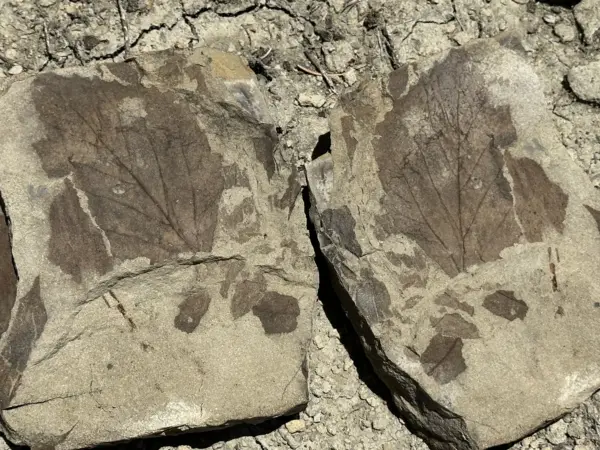
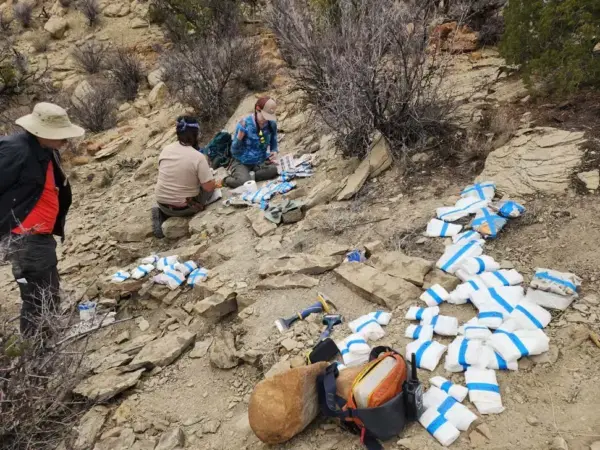
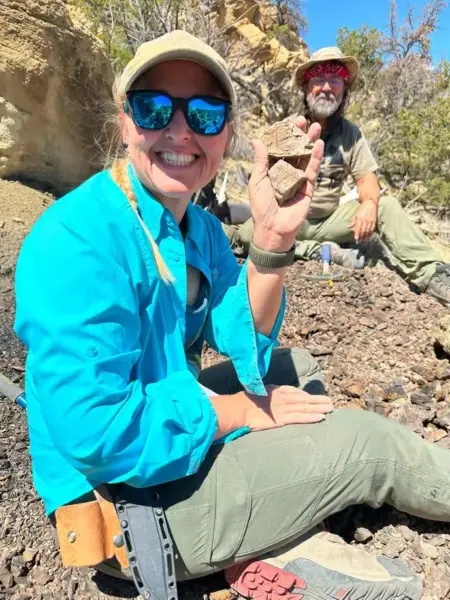
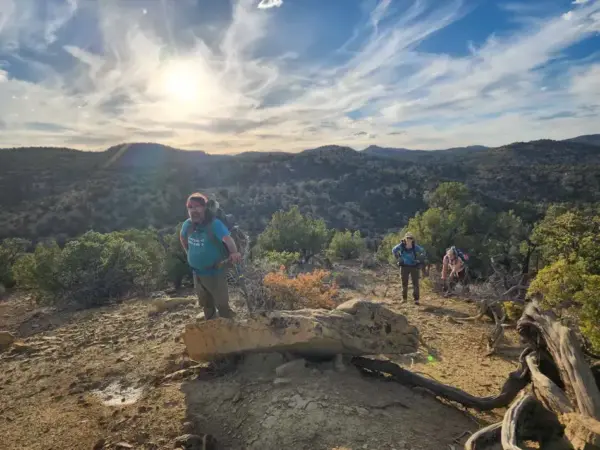
The PMNS team then split off to do broad fossil collection across the area, endowing each fossil site with their own colorful naming convention: Cone Dome, Flower Power, Bacon Bits, and Conifer Creek. Just don’t ask about how the Cactass and Blowout fossil deposits were named, all we will say is that they commemorate encounters of the derriere kind with hiking pants and modern flora… They found two new fabulous fossil leaf sites chock full of whole leaves. It took two days of excavation and in-field fossil leaf counts to completely sample it, hiking out heavy backpacks full of the best-preserved leaves.The second leaf site was a tiny pocket of fossil ferns preserved in delicate mudstones within a thicker layer of coal, probably representing ferns growing along a very swampy area. It’s all very exciting for paleobotanists until the end of each day when they have to make the hike up the steep terrain with backpacks full of rocks back to camp.
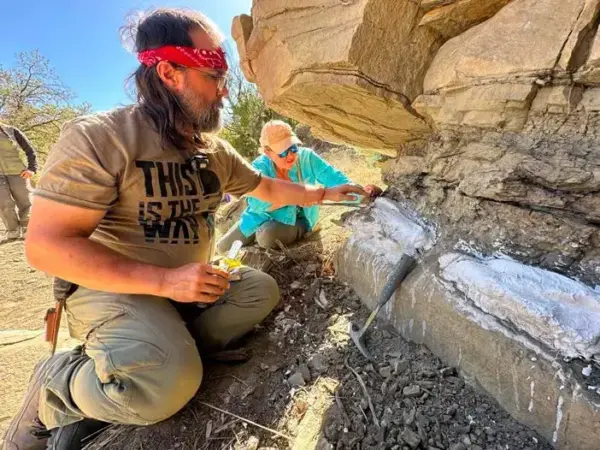
PMNS spent a couple of days jacketing fossil bones that were found earlier this year, and invited NMSU students to participate in the process, and also enlisted their help in collecting fossils at several sites. All that hard work produced fantastic results: in addition to fossil leaves, fossil fruits, flowers, cycads, and conifer branches with cones were collected.
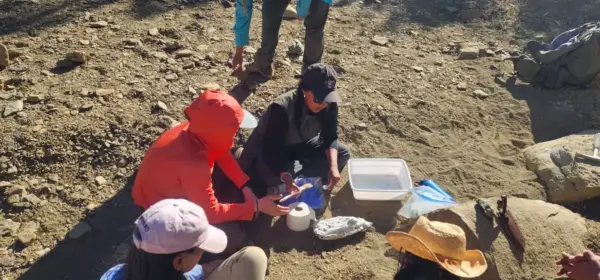
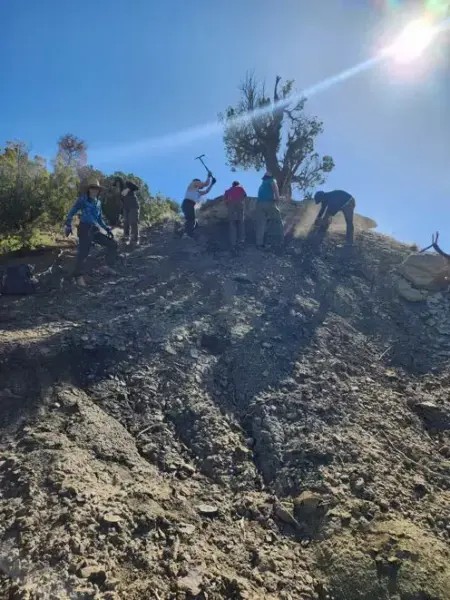
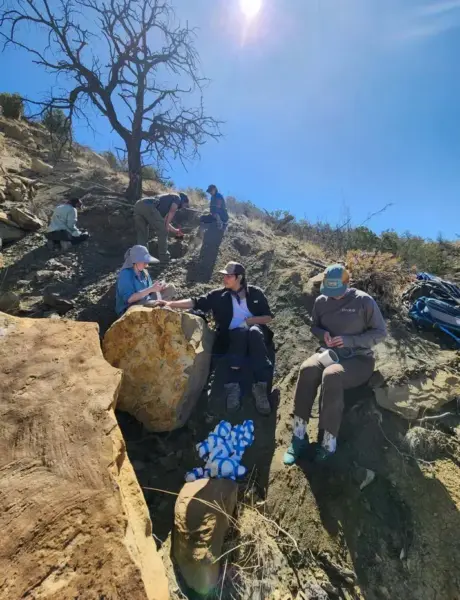
The combined PMNS-NMSU-Hanover team spent a day doing joint exploration on a BLM site where the beach sands of the Gallup formation underlie the Crevasse Canyon formation. The Gallup formation’s trace fossil evidence of burrowing marine organisms preserved in the massive sandstones confirm its location adjacent to the shoreline.The importance of looking at this bottom part of the Crevasse Canyon is to anchor it in time. Working out ages of the very base of the formation will give better overall constraints for the total age of the Crevasse Canyon formation in this area of New Mexico. Fortunately, the lowest exposures of the Crevasse Canyon formation here have nice organic-rich layers of coal and mudstones that PMNS were able to sample for palynological (pollen) analysis. From the pollen, we will get an idea of the plant community near the shore, as well as biostratigraphic ages.
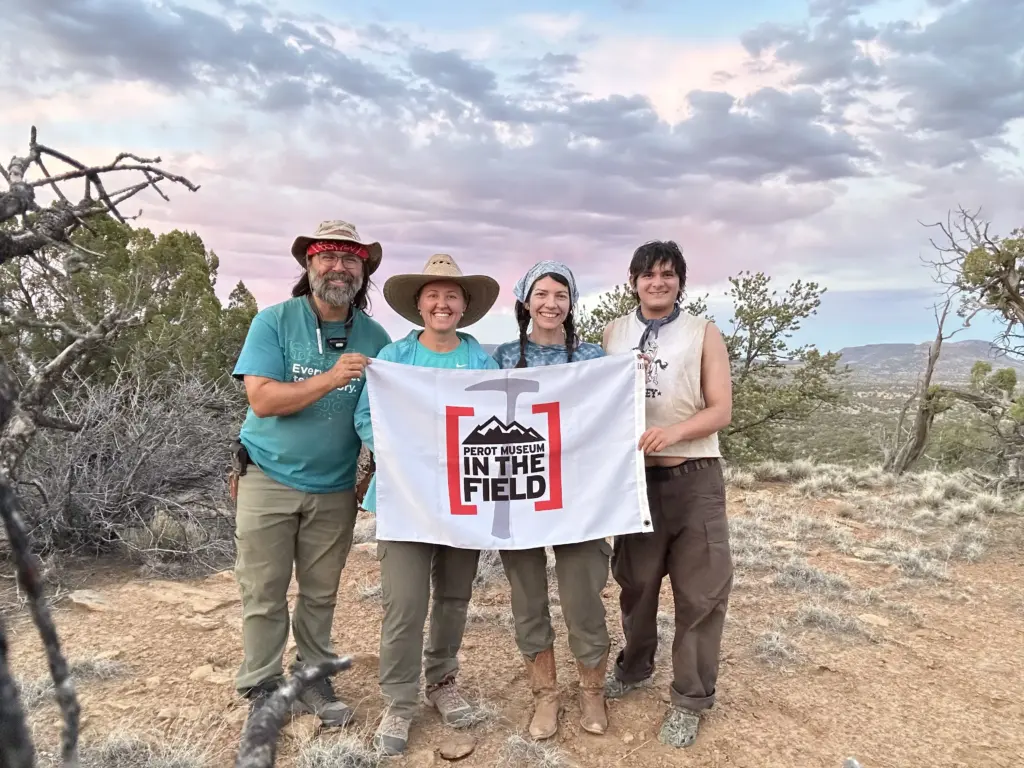
The PMNS team leftleft with much accomplished, and yet much more to do. Future expeditions will focus on expanding the sampling area so that we can discover new aspects of this ancient ecosystem. Every hole in ground gives a different glimpse.
For a more technical description of the PMNS program at RFS, please visit our Programs and Research Page.
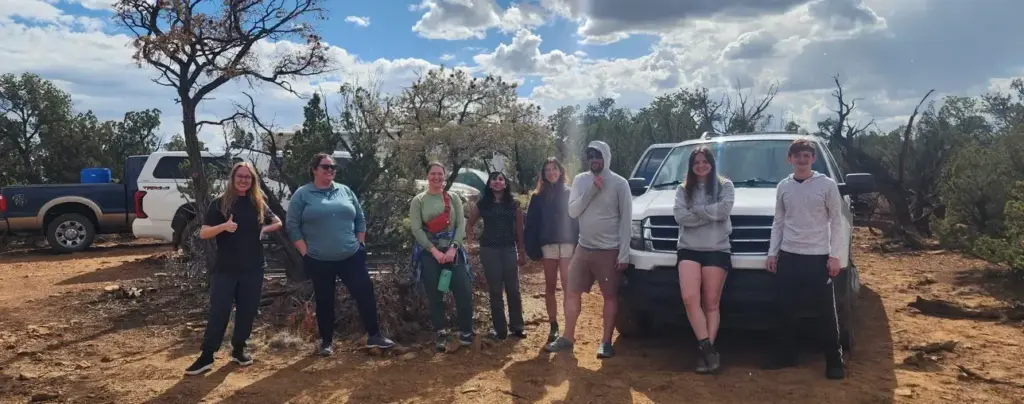
NMSU has developed 5 main goals for their ongoing and future research projects at RFS over the next 2 – 5 years:
The effort will take the combined efforts of 4 professors as well as current and future graduate students, and undergraduate field assistants.
Determining the age of the RFS deposits is the most pressing research topic, as it will give context to all other results and structure future research. The methods applied to developing the age model are: magnetostratigraphy measurements; sampling and analysis of detrital zircon and sanidine maximum depositional ages, and integration with biostratigraphy from PMNS’s plant, pollen and vertebrate data. The May 2026 field season involved collecting samples for all three of these methods.
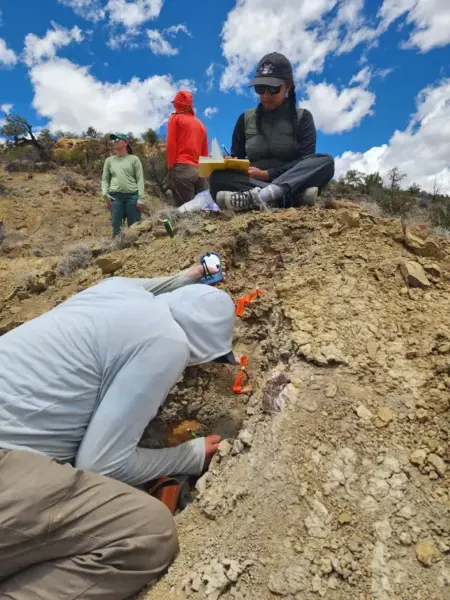
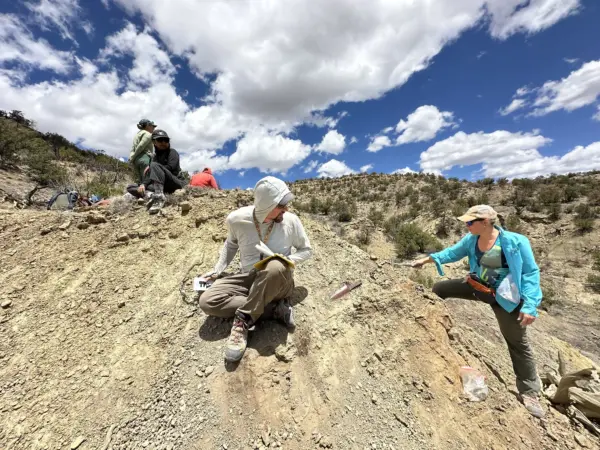
The May field season also sought to document the transition between the underlying Gallup and the Crevasse Canyon formation (future work will examine the overlying Baca formation relationship). An additional goal was to start at the base of the Crevasse Canyon formation and measure high resolution stratigraphy and sedimentology throughout the entire section. The methodology will include using paleosol morphology to investigate changes in water table and basin fill during deposition, and develop a paleosol maturity index for the Crevasse Canyon formation. Bulk geochemistry analyses will be applied to paleosol samples taken in May. May’s tasks also included collecting preliminary magnetostratigraphy, geochemistry, and other samples. High-resolution stratigraphy will allow us to place all the fossil localities, age model, paleoclimate results, and all other data in a shared framework.
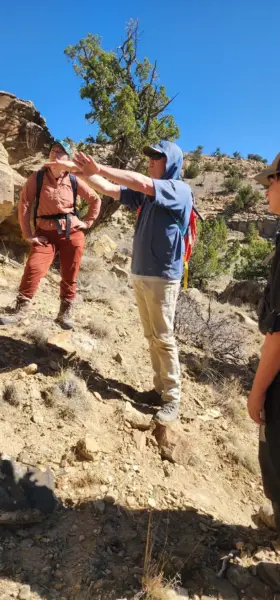
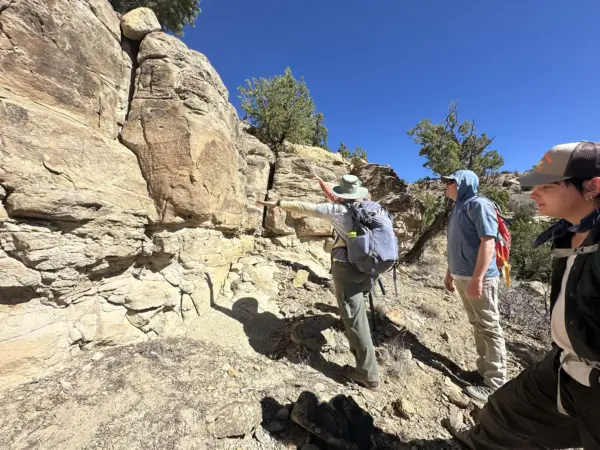
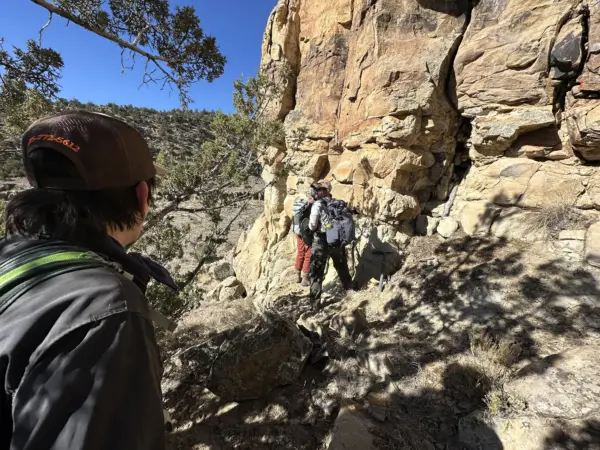
For the provenance and tectonics research, the May field plan included collecting more samples from the lower-most Crevasse Canyon for: detrital zircon geochronology paired with zircon geochemistry; detrital sanidine geochronology for high resolution provenance determinations, and sandstone modal composition. The zircon, sanidine and heavy mineral sets are complementary and can help provide evidence for paleo drainage networks to work out changing tectonic and climatic conditions through time.
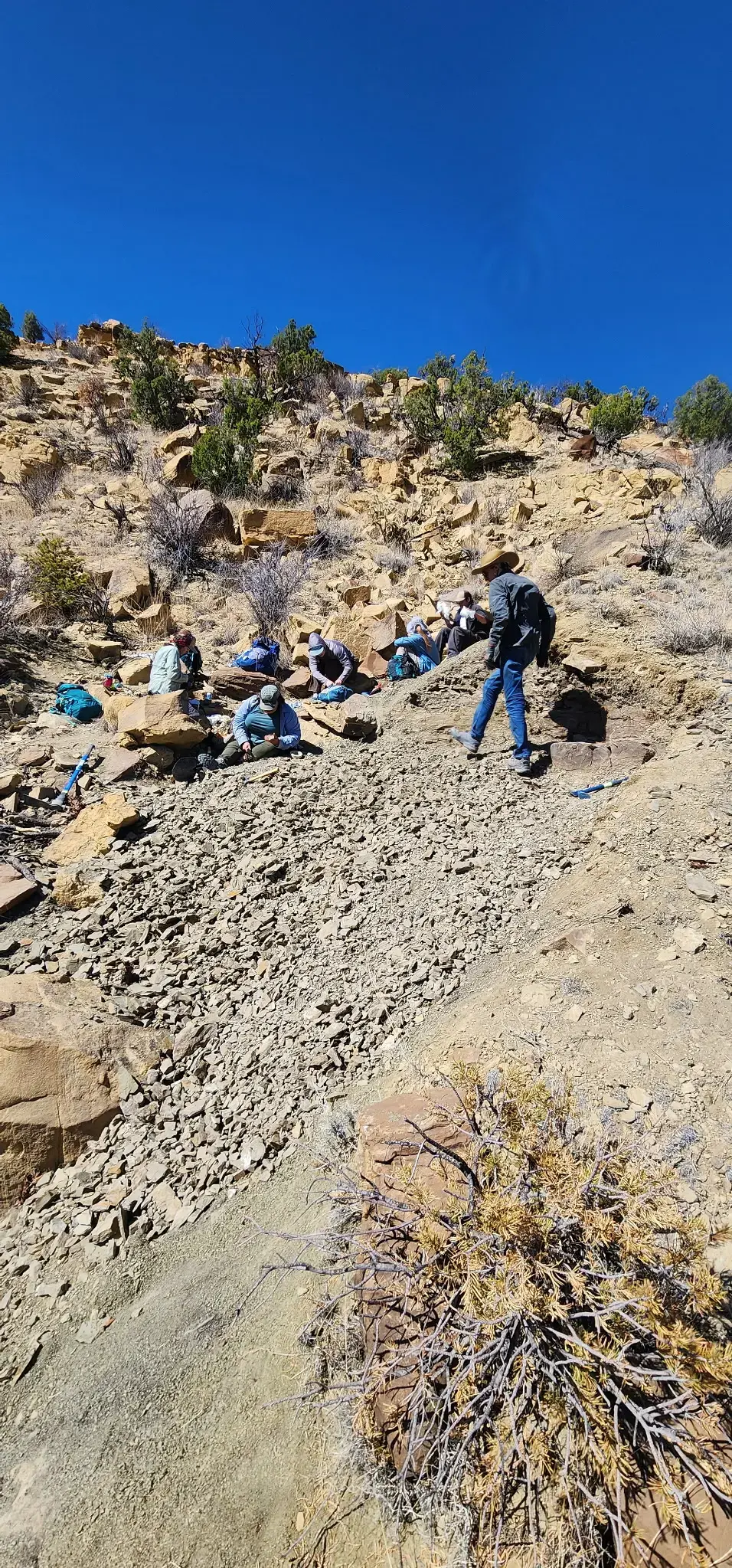
The final goal for the May field season was to collect samples to help answer questions about why the Crevasse Canyon formation does not make a good reservoir, with poor porosity and permeability in spite of its numerous sands. The NMSU team is seeking to find out if there might be a tectonic control on reservoir quality, because previous sampling has shown diagenetic of cementing precipitation. This research builds on previous research on the prevalent siderite in the Crevasse Canyon formation.
All of NMSU’s goals for the May sampling and measurement season were accomplished, and many productive discussions were held between the two teams, as well as joint sampling for different types of samples in the same locations. The students were afforded a fantastic field experience with professionals across diverse disciplines.
For a more technical description of the NMSU research at RFS, please visit our Programs and Research page.
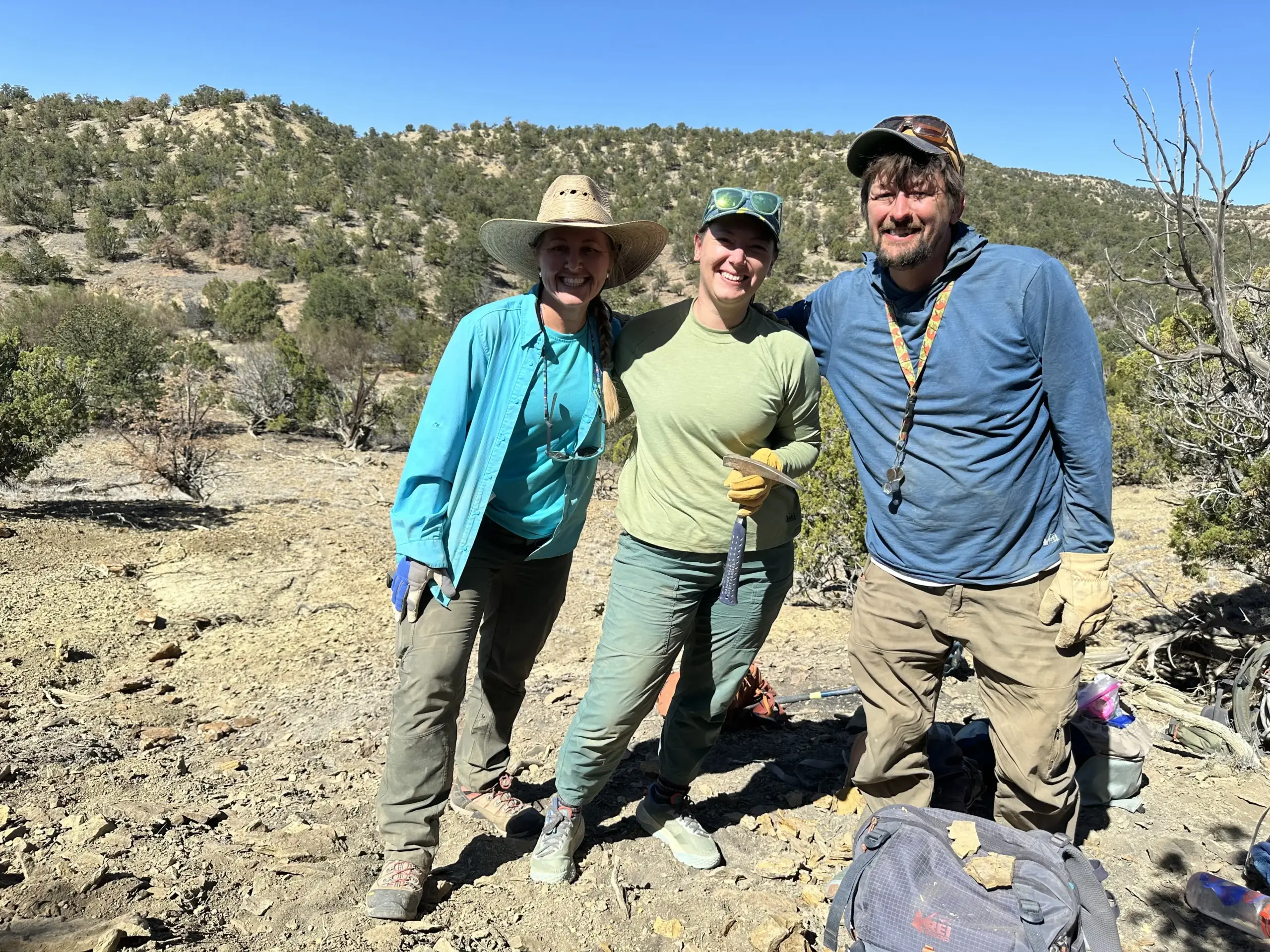
Rachel Laker (center in the photo above) joined the team from Hanover College in Indiana. This was her first visit to RFS. Her research goal for the May field season was to collect modern antler sheds (deer and elk) and to evaluate RFS’s potential for further research and field education opportunities.
Rachel’s research is centered around bone preservation in the fossil record. Her current project focuses on bone weathering, or the flaking and splitting that occurs as bones lay exposed on the landscape. Left unburied, bones gradually weather and splinter apart over time. The rate at which bones weather is thought to be heavily influenced by climate and bone shape/size – Rachel’s work seeks to quantify this variability.
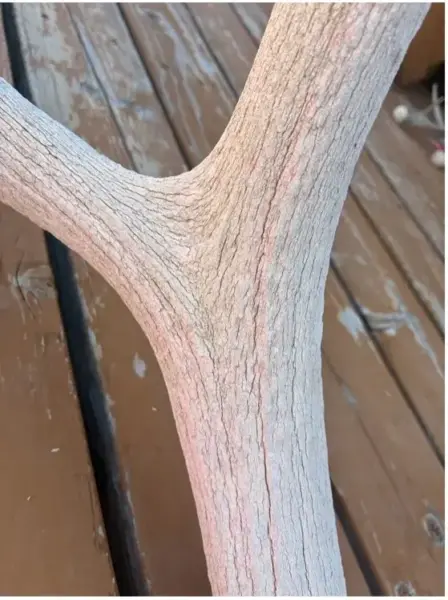
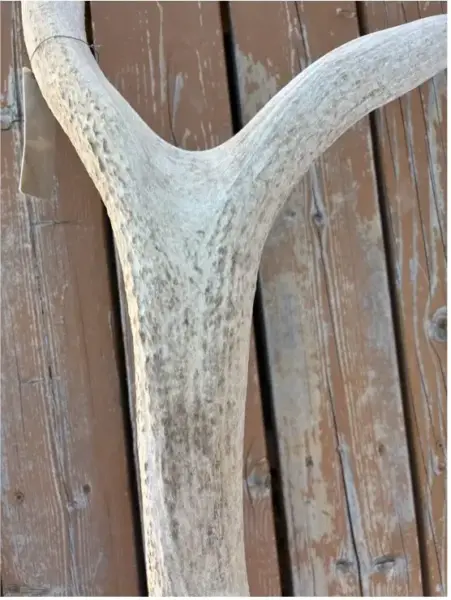
A comparison of weathered (left) versus fresh (right) antlers collected from RFS. Fresh antlers have a smooth, waxy surface, but gradually become more textured, flaky, and cracked as they age on the landscape.
Rachel collects shed antlers from landscapes across the western US and radiocarbon dates them to estimate how long they’ve been weathering since they were shed. She then uses this information, along with qualitative and quantitative measurements of bone surface texture, to determine the rate of bone weathering. Antlers from RFS will be compared against other antlers from Texas to Alaska to understand how weathering rates (and bone persistence) varies across different climates. The difference in species sizes (deer versus elk) are useful for evaluating the influence of bone thickness and morphology as additional variables.
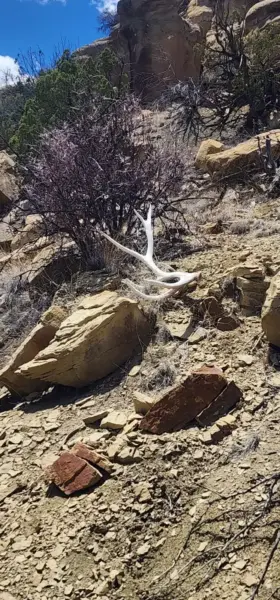
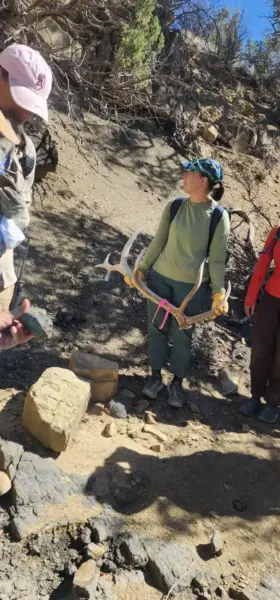
Knowing Rachel’s research sampling needs, the entire group kept a sharp eye out for sheds, photographing the aspect as they were found on the ground, and adding to the collection Rachel was gathering herself. So Rachel went back to Indiana with a good size collection of sheds.
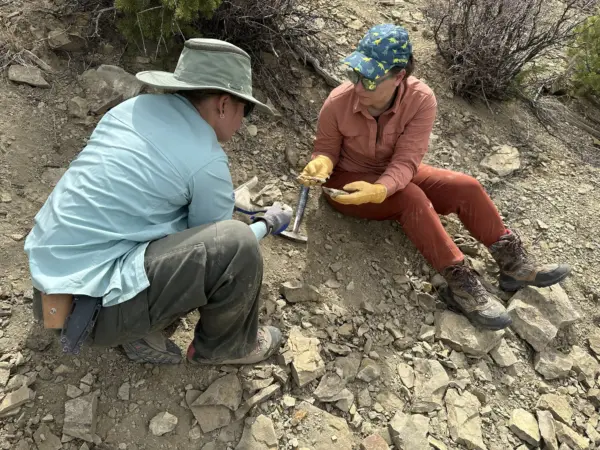
In addition, her expertise in sedimentology was appreciated by everyone, and she enthusiastically contributed her professional opinion and assistance on the whole group expeditions to characterize the transition between the Gallup formation and the base of the Crevasse Canyon. Rachel was a great addition to the army and achieved her own research goals as well!
Our Appreciation
We appreciate all the planning and communication the two teams did before field season to ensure so many scientific goals were met. We are very gratified by all the dedicated and delightful members of the May field season expeditions, and we look forward to their return in the future! Thank you one and all!
The PMNS-NMSU-Hanover team had no sooner left RFS than the Astronomical Society of Las Cruces brought their telescopes to RFS for an entirely different kind of adventure. You can check out their story here.
RFS is pleased to announce the Reynolds Field Station booth at Geological…
Reynolds Field Station’s leaders provide leadership and support to Friends of Field…
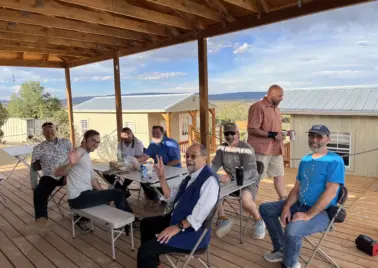
RFS hosted the Astronomical Society of Las Cruces (ASLC) for several fun-filled…
INTERESTED IN LEARNING MORE?
We are passionate about the sharing the amazing environment and scientific learning opportunities at the Reynolds Field Station. We encourage you to Contact Us about ways you and your institution can participate in exploring and contributing to the science and appreciation of this natural wonderland. We are a 501(c)(3) public charity and welcome donations that will enable travel expenses, grants and scientific equipment for learners who need assistance participating at the Field Station.