RFS Supports Friends of Field Camps & US Geoscience Field Education Programs
Reynolds Field Station’s leaders provide leadership and support to Friends of Field…
RFS is pleased to announce the Reynolds Field Station booth at Geological Society of America Connects 2026 Conference. You can talk to RFS Directors, pick up literature, and explore opportunities to visit and participate in Reynolds Field Station learning and research programs. Students and faculty who are currently conducting research at the Field Station will also be dropping by to give their first-hand views of the facilities. We will also be featuring flyers and handouts about Friends of Field Camps (see our News Blog Post about this). Come by and visit us, we’re at Booth #204, we look forward to seeing you there!
We are proud to announce that the research results to date of the Perot Museum and New Mexico State University teams, which has been taking place at the Reynolds Field Station over the last three years, will be presented at GSA Connects 2026. This talk is titled: 349-6 Terrestrial Ecosystem of the Late Cretaceous Crevasse Canyon Formation in West-central New Mexico. It is part of the Session T138: New Advances in Mesozoic Paleontology, Stratigraphy, and Paleogeography of the Western Interior of North America (Part II). It will be presented on Wednesday, October 14 at 1:30 PM in CCC, Bluebird Ballroom 3A.
Dori Contreras, Perot Museum of Nature & Science, Director of Paleontology & Curator of Paleobotan
Contreras, Dori L.1, Flynn, Andrew G.2, Jud, Nathan Andrew3, Tykoski, Ronald S4, Hampton, Brian A.5, Kuyl, Leo6, Zippi, Pierre A7
(1) Science Division, Perot Museum of Nature and Science, Dallas, TX, USA, (2) Department of Geological Sciences, New Mexico State University, Las Cruces, NM, , (3) Department of Biology, William Jewell College, Liberty, MO, USA, (4) Science Division, Perot Museum of Nature and Science, Dallas, TX, USA, (5) Department of Geological Sciences, New Mexico State University, Las Cruces, NM, USA, (6) Department of Geological Sciences, New Mexico State Univ, Geological Sciences, Las Cruces, NM, USA, (7) Biostratigraphy.com, LLC, Garland, TX, USA
We report progress on an integrative study of the Crevasse Canyon Formation in the Acoma Basin of west-central New Mexico, offering new insights into a critical gap in the North American terrestrial record. During the middle to Late Cretaceous, the diversification of flowering plants (angiosperms) led to changes in habitat structure and boosted terrestrial biodiversity alongside major faunal turnovers. However, key time intervals and geographic regions remain poorly understood; in North America, the Coniacian–Santonian terrestrial record is remarkably sparse. The Crevasse Canyon Formation records terrestrial environments increasingly inland of the prograding shoreline of the Western Interior Seaway, with age constraints based on palynology and U–Pb zircon geochronology in the study area ranging from the Coniacian–early Campanian (~90–80 Ma). The depositional system is characterized by isolated, cross-stratified channel sandstones encased in floodplain strata, alongside laterally extensive sandstone bodies. Plant fossils, including pollen, foliage, permineralized woods, flowers, and fruits/seeds, have been collected from a variety of fluvial facies representing overbank and lacustrine deposition along a meandering river system. Preliminary floral analyses demonstrate the presence of both conifer and angiosperm trees, including Cupressinoxylon, Paraphyllanthoxylon, and other coniferous and hamamelid-type woods. Fossil foliage of woody, herbaceous, and aquatic angiosperms is common, including platanoid and lauralean-type leaves as well as other simple-leaved dicots and monocots. Conifers are less abundant than angiosperms at most sample sites; they include the branches and cones of a redwood, as well as foliage of the morphogenera Geinitzia and Brachyphyllum. Cycads are rare, and while ferns are not commonly recovered as leaf macrofossils, their spores are often prevalent in palynological samples. Although fossil vertebrate material is scarce, fragmentary occurrences provide preliminary insights into the local fauna. Together with refined sedimentological interpretations and age model, this work is providing a new window into ecosystems of the southern Western Interior during a transformative but poorly documented phase of terrestrial evolution.
We are also pleased to announce that A-Lan Reynolds, President of Reynolds Field Station, will be giving a talk about the efforts of a national alliance, of which RFS is a part, to support geoscience field camps and their students. We will be introducing Friends of Field Camps and our collective actions in this talk. The talk is titled: 345-9 Securing Field Camps for the Present and Future: Collaborative Action and Sustainable Field Education Models from Friends of Field Camps (FOFC). It is part of Session T192:Geological mapping: Geologic maps underpin many geological interpretations and add significant value. What might the future hold and who will be the mappers? It will be presented on Wednesday, October 14 at 4:00 PM in CCC, Bluebird Ballroom 2E
A-Lan Reynolds
Reynolds, A-Lan1, Appelbaum, Bruce2
(1) Friends of Field Camps, USA; Reynolds Field Station for Education & Science Research, New Mexico, USA, (2) AAPG, Houston, TX, ; Friends of Field Camps, USA
Geologic mapping underpins critical interpretations across energy, water resources, environmental engineering, hazards mitigation, and mineral exploration. However, the foundational training ground where future mappers develop spatial reasoning and observational discipline — university field camps — faces severe challenges. Declining enrollments, escalating operating costs, and diminishing institutional support threaten the survival of field programs nationwide. If field education falters, who will train and become the mappers of tomorrow?
To address this field skills crisis, the Friends of Field Camps (FOFC) coalition emerged in 2025 as a national alliance of professional societies and foundations, government agencies, geoscience faculty, and industry partners. FOFC is taking coordinated action across several key pillars to help field education survive and thrive:
To meet future mapping demand, field education must broaden beyond traditional boundaries to encompass the full spectrum of modern geosciences. This talk invites faculty to engage with FOFC’s shared resources, assess adaptable program models, and participate in a unified effort to inspire, train, and secure the next generation of field geoscience mappers.
Reynolds Field Station’s leaders provide leadership and support to Friends of Field…
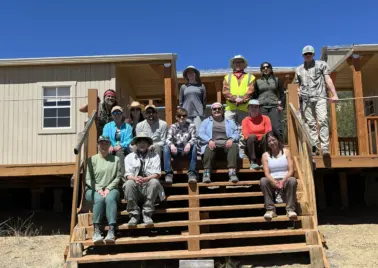
A dynamic multi-disciplinary group of researchers, professors and students from the Perot…
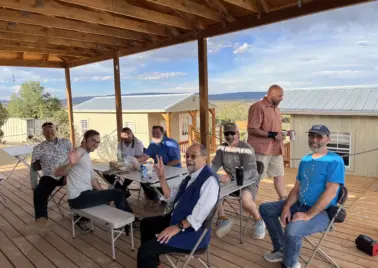
RFS hosted the Astronomical Society of Las Cruces (ASLC) for several fun-filled…
INTERESTED IN LEARNING MORE?
We are passionate about the sharing the amazing environment and scientific learning opportunities at the Reynolds Field Station. We encourage you to Contact Us about ways you and your institution can participate in exploring and contributing to the science and appreciation of this natural wonderland. We are a 501(c)(3) public charity and welcome donations that will enable travel expenses, grants and scientific equipment for learners who need assistance participating at the Field Station.